
| ⬅️ Previous | 🇬🇷 Greece | Next ➡️ |
🇬🇷 Episode 8 — Visiting Delphi: Apollo’s sanctuary, museum and Athena Pronaia
27 October – 6 November 2023
Delphi and Hosios Loukas, Greece
Episode 8 of 10
In this article
The road climbs, bends follow one another and mountain scenery stays in view. On 2 November 2023, we left Meteora for Delphi through landscapes we found beautiful.

We made no sightseeing stops en route, hoping to reach the hotel before it grew too late. The next morning we divided Delphi into three visits: the main site, museum and Sanctuary of Athena Pronaia. Before reaching Athens, we also visited Hosios Loukas monastery, a little over thirty kilometres away.
Delphi has been a UNESCO World Heritage Site since 1987. It extends across the slopes of Mount Parnassus. Allow around three hours from Meteora, adjusted for your route, breaks and traffic.
A night in Delphi village
We stayed at Parnassos Delphi Hotel in the village centre for around US$77 a night in 2023.


The location suited us: an evening in the village and an early start the next day. We liked the hotel and breakfast, and staying in Delphi avoided a long drive before sightseeing.


Climbing through the Sanctuary of Apollo
Delphi was one of ancient Greece’s great religious centres, associated with Apollo and his oracle. The Pythia delivered her answers here, and city-states consulted the sanctuary before major decisions.


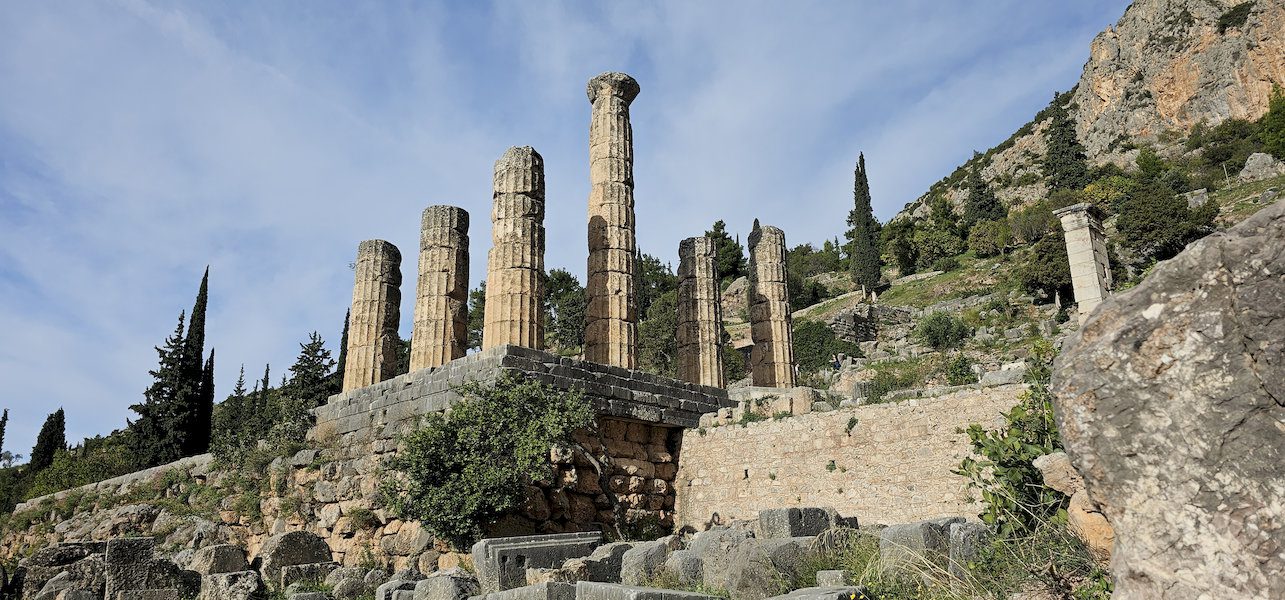


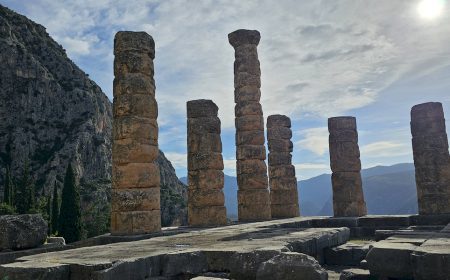
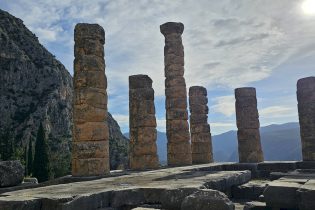
Today you discover the site by climbing the slope. Ruins appear gradually with the valley behind them. We explored the main site all the way to the stadium, enjoying the ascent at our own pace.
The Sacred Way leads between monuments and ancient treasuries, small buildings where city-states displayed offerings. Beyond them are the remains of Apollo’s temple, the theatre and, higher still, the stadium.


The terraces reveal the sanctuary’s scale. The scenery is central to the impression Delphi leaves: buildings spread across a slope opening onto the valley.
Visit early and allow a full half-day
In early November, visitor numbers seemed reasonable. We still needed patience in a few places to photograph the ruins without too many people.
Allow a full half-day for the three areas, or longer if you read every panel and take plenty of photographs. Slopes, steps and uneven ground call for good shoes and an unhurried pace.
The official ticketing website lists a ticket covering the main site and museum. Check Athena Pronaia’s access arrangements and opening hours separately before travelling.
The museum and the Sphinx of the Naxians
The museum was a real discovery, particularly the Sphinx of the Naxians.

The marble sculpture impressed us with its size and presence: a woman’s head, a lion’s body and wings. We had not known it before visiting, so we had not expected it to become a museum highlight.
The people of Naxos offered the sphinx to the sanctuary in the sixth century BC. It stood on a tall column. Seeing it in the museum helps you imagine the impact of the offering in the ancient sanctuary.


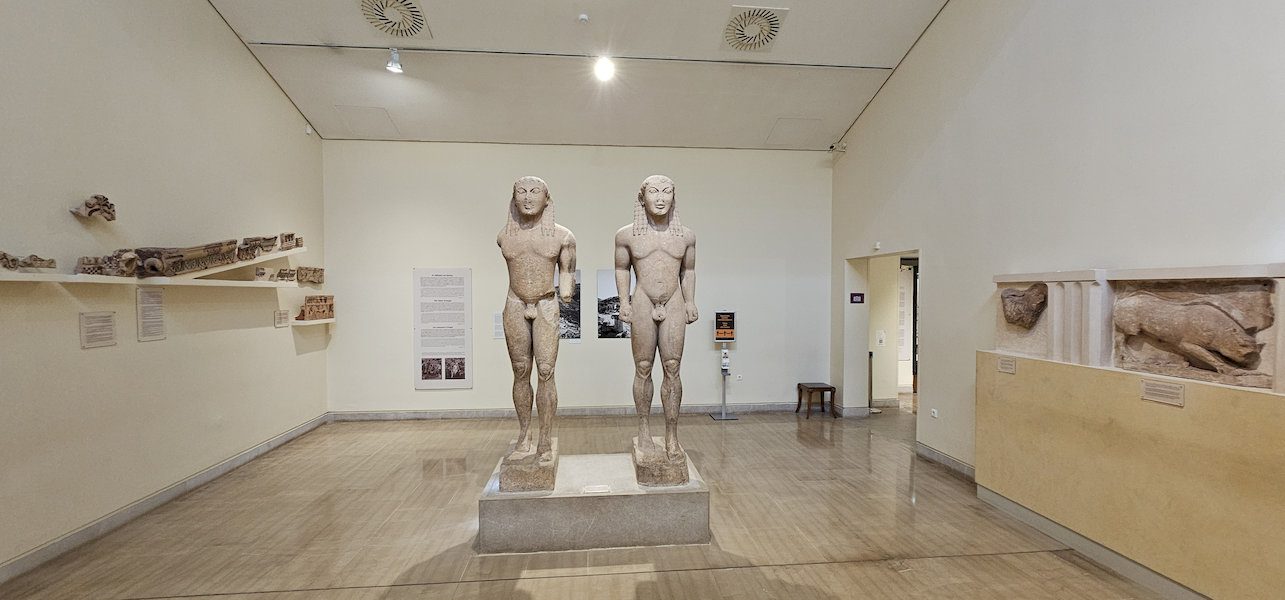
The sculptures and objects complement what you see outside. They convey the site’s former wealth beyond its surviving foundations and columns.
The museum also houses the Charioteer of Delphi, a fifth-century BC bronze associated with a chariot victory at the Pythian Games. Look for it among the other works rather than reducing your visit to a single masterpiece.
Do not miss Athena Pronaia
We also visited the Sanctuary of Athena Pronaia, further down the slope.

The Tholos, with its circular plan and re-erected columns, is one of Delphi’s best-known images. Built in the fourth century BC, it differs from the rectangular temples seen elsewhere. Its precise function remains debated.


This area lies below the main site alongside the road. Plan for it separately so you do not leave after the museum and forget it. Check access conditions before visiting.
A stop in Arachova along the way
After Delphi we also stopped in Arachova, a mountain village on the slopes of Parnassus at around 970 metres above sea level. Its stone houses, tiled roofs and narrow lanes offer a different setting from Santorini’s white villages.

The clock tower, standing on its rock, dominates views over the valley. Known for its proximity to Parnassus’s ski slopes, Arachova also deserves a stop outside winter before continuing to Hosios Loukas monastery.


After these visits, we left Delphi for Hosios Loukas monastery before continuing to Athens.

Hosios Loukas: our stop after Delphi

On 3 November, after visiting Delphi, we did not go straight to Athens. We made a detour to Hosios Loukas monastery, also spelt Osios Loukas, near Distomo and Steiri. We explored the complex, including its interiors, before continuing to the capital.
The monastery is around 35 km from Delphi, roughly 40–50 minutes by car. Afterwards, allow about two hours to reach Athens, depending on your destination and traffic. These are planning estimates, not timings we recorded during our journey.
A Byzantine monastery between two ancient stops
After Delphi’s ancient sanctuaries, Hosios Loukas introduces another period of Greek history. The community developed in the tenth century around Luke of Steiris, a local hermit who spent his final years here. The monastery is named after him, not Luke the Evangelist.


Two neighbouring churches form the heart of the complex: the tenth-century Church of the Virgin and the larger church, or katholikon, from the early eleventh century. Stone and brick patterns decorate façades visible from the courtyard. The monastery has been UNESCO-listed since 1990, together with Daphni and Nea Moni on Chios.
Inside, take time for the gold-ground mosaics, marble revetments and decorative details. The crypt beneath the main church also preserves frescoes. The interiors explain much of the site’s appeal, beyond photographs of its façades.
The summer 2023 fire, shortly before our visit
When we visited in early November 2023, the monastery had recently escaped the worst. On 23 August 2023, a fire reached the surroundings and part of the complex. The fire was not ongoing during our visit; it had happened several weeks earlier.
According to Greece’s Ministry of Culture, the two churches and crypt were spared. However, a nineteenth-century cell in the southeastern wing was destroyed and ancillary facilities were damaged. Saying the entire monastery escaped unharmed would be inaccurate: its Byzantine core survived, but part of the site was affected.
Honey, monastic products and visiting tips
You could also buy honey and products made by the monks. It is a detail from our visit worth remembering if you want to bring something home. Availability may vary and we did not keep a record of prices.
For planning, allow one to two hours on site to explore the complex and its decoration without rushing. This is a suggested duration, not a time recorded on our visit. The official listing indicates parking. Dress respectfully for a place of worship and follow the displayed indoor photography rules.
At the time of this update, in October 2026, Hellenic Heritage lists daily opening hours of 8.30 am–3.30 pm, with last admission twenty minutes before closing, except exceptional closure days. The listed full admission price is US$11 : this is not the price we paid in 2023. Check the official Hosios Loukas listing before visiting, particularly if you are also seeing Delphi that morning.
Afterwards we continued towards Athens. Follow the next stage in our article on Athens, from the Acropolis to Lycabettus.
Our thoughts on Delphi
We enjoyed the combination of ruins, museum works and mountain scenery.
Staying overnight allowed us to visit without rushing. Delphi made a fascinating transition between Meteora and Athens, while Hosios Loukas completed the day by moving from ancient to Byzantine Greece.
To place this day within our journey, see our Meteora stop and the full itinerary and trip budget.
Map: mainland Greece
Find our sightseeing stops, accommodation and restaurants. Suggested places we did not visit are marked separately on the map.
Episodes from our trip to Greece
- Full itinerary — Greece in 11 days: Santorini, Meteora, Delphi and Athens
- 🇬🇷 Episode 1 — Oia and Ammoudi: our first steps in Santorini
- 🇬🇷 Episode 2 — Imerovigli and Skaros: our favourite views in Santorini
- 🇬🇷 Episode 3 — Pyrgos, Emporio and Megalochori: Santorini’s villages
- 🇬🇷 Episode 4 — Southern Santorini: Zoodochos Pigi, Perissa and Red Beach
- 🇬🇷 Episode 5 — Santorini boat trip: volcano, hot springs and Thirassia
- 🇬🇷 Episode 6 — Santorini sunsets: our viewpoints and favourite restaurants
- 🇬🇷 Episode 7 — Meteora in two days: monasteries, viewpoints and a walk
- 🇬🇷 Episode 8 — Visiting Delphi: Apollo’s sanctuary, museum and Athena Pronaia
- 🇬🇷 Episode 9 — Athens: our visits from the Acropolis to Lycabettus
- 🇬🇷 Episode 10 — Cape Sounion at sunset: the Temple of Poseidon
| ⬅️ Previous | 🇬🇷 Greece | Next ➡️ |
Planning your visit
UNESCO — Delphi · Official Delphi website · Official ticketing · Official information — Hosios Loukas · UNESCO — Hosios Loukas · Official report on the 2023 fire.
Currency note: prices were paid in euros. US dollar amounts use an illustrative conversion of €1 = US$1.10 for readability; this is neither a live rate nor the rate applied to our 2023 payments.