
Egypt in 10 days: Cairo, Nile cruise and Abu Simbel
From 9 to 18 April 2026, we discovered Egypt with a format very different from our usual trips: two days exploring Cairo, followed by a Nile cruise between Luxor, Edfu, Kom Ombo and Aswan, with excursions as far as Abu Simbel. Only ten days, but an impressive concentration of temples, tombs, museums and time spent sailing on the Nile.
We booked the 10-day Isis package on a full-board basis, including flights, transfers, a hotel in Cairo and then the cruise. The organiser adjusted parts of the schedule once we were there, but the main stages remained the same. This page therefore reflects the trip we actually experienced and links to the 11 detailed episodes in the series.
9–18 April 2026
10 days / 9 nights
Paris → Cairo
Luxor → Paris
Full board
Gewan Hotel Cairo
MS Monica 5★
Our 10-day Egypt itinerary
This trip was not a self-drive road trip. Transport was organised using a combination of domestic flight, coach, cruise ship and small local boats. The exact order of some visits was rearranged on site, which is fairly common on this type of organised itinerary.
Days 1 to 3 — Cairo, Giza and the Grand Egyptian Museum
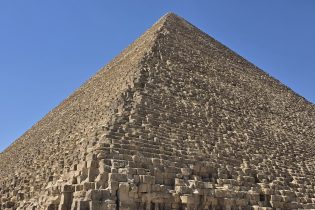
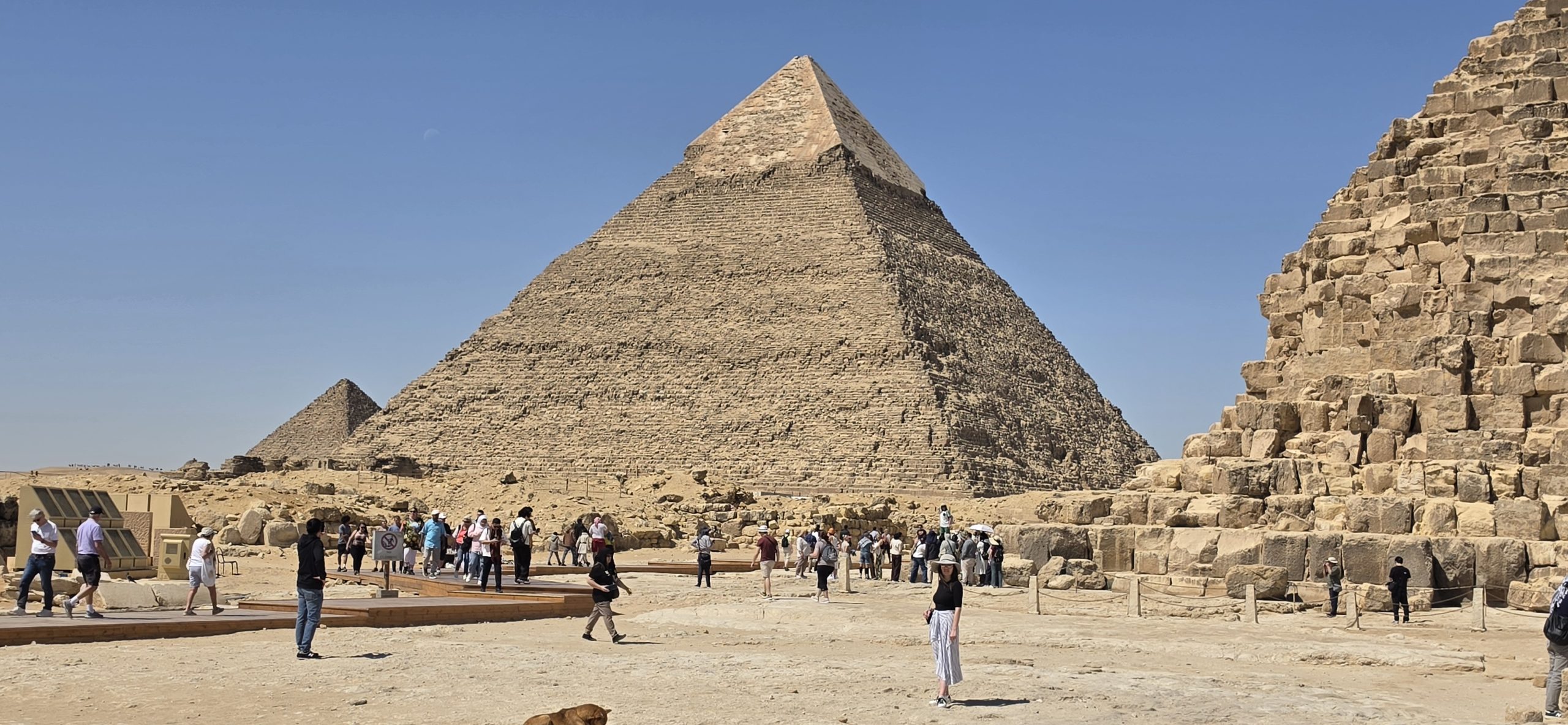
We begin in Cairo, staying at the Gewan Hotel Cairo. Over two very full days, we visit Saqqara and Djoser’s Step Pyramid, Memphis, the Giza Plateau with its pyramids and the Sphinx, as well as the Citadel of Saladin, the Mosque of Muhammad Ali, Khan el-Khalili and Al-Azhar Mosque.
The Grand Egyptian Museum (GEM) is another major stop. Tutankhamun’s collection adds a completely different dimension to what we later discover inside his tomb in the Valley of the Kings.
At the end of this first part of the trip, we take an EgyptAir domestic flight from Cairo to Luxor to join our cruise ship.
Day 4 — Luxor West Bank: queens, Hatshepsut and the Valley of the Kings
This is one of the most intense days of the trip. We visit the Colossi of Memnon, Malqata, the Valley of the Queens and the spectacular Temple of Hatshepsut, before continuing to the Valley of the Kings. We buy the additional ticket for Tutankhamun’s tomb (KV62) directly at the official ticket office, where his mummy can still be seen.
Day 5 — Edfu, sailing and Kom Ombo at night
This is when the cruise really comes into its own. After visiting the remarkably well-preserved Temple of Edfu, we return to the MS Monica for lunch and continue sailing down the Nile. In the evening, we visit the double temple of Kom Ombo illuminated after dark, followed by the nearby museum dedicated to mummified crocodiles.
Days 6 and 7 — Aswan, Philae, Nubia and a day on our own
In Aswan, we start with the High Dam and Lake Nasser before taking a boat to the Temple of Philae. We also visit a colourful but very touristy Nubian village, an experience that left us with mixed feelings, particularly regarding the crocodiles kept in captivity.
No official excursion was scheduled the following day. Together with other travellers we met on board, we therefore organised our own day: a local boat to the botanical garden on Kitchener’s Island, followed by the Aswan souk and the city. It became one of the most spontaneous and enjoyable days of the whole trip.
Day 8 — Abu Simbel: is the 3 a.m. wake-up really worth it?
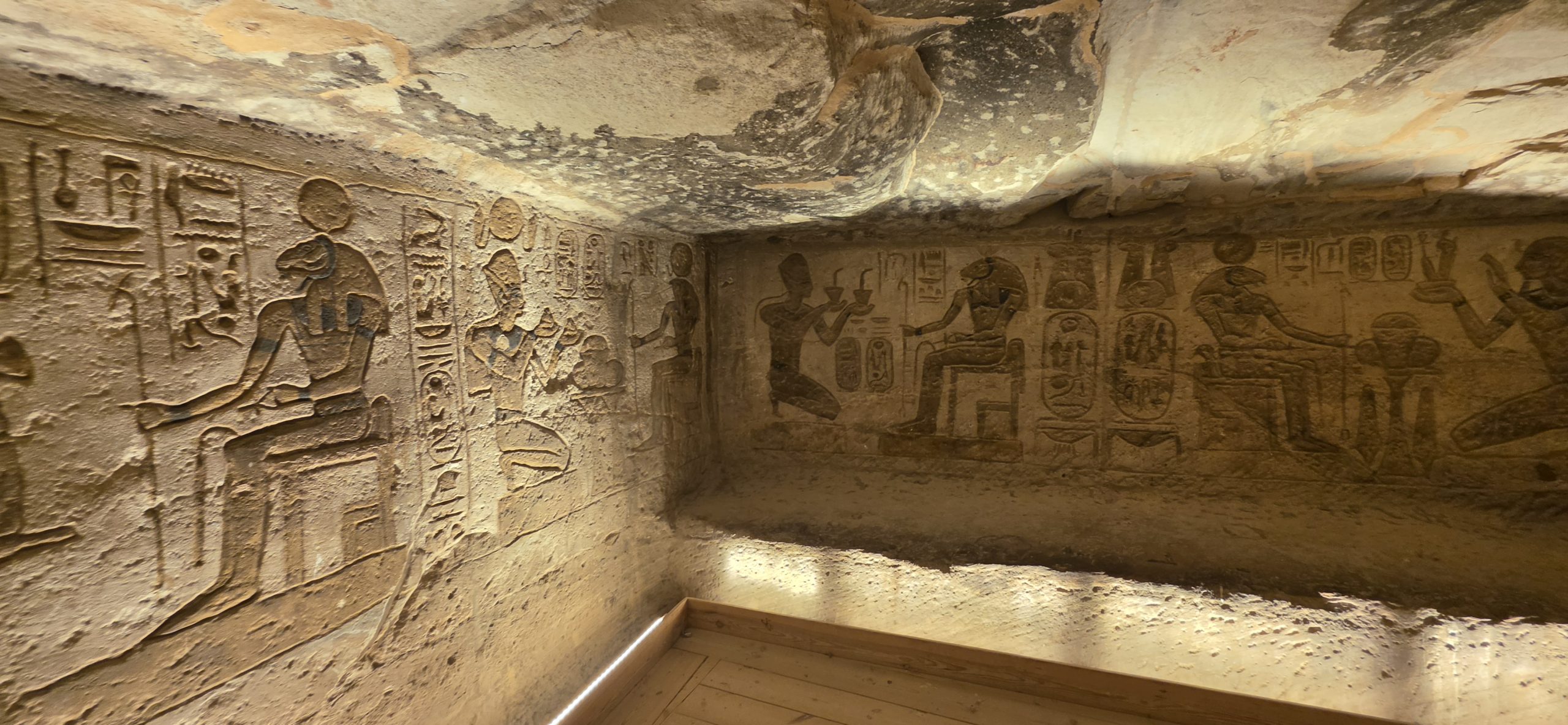
For Abu Simbel, the alarm goes off at 3 a.m. Three hours across the Nubian Desert lie ahead before we finally stand in front of the colossal statues of Ramesses II and the temple of Nefertari. The fatigue almost disappears as soon as the site comes into view.
The main drawback of this organised excursion is that a large number of coaches arrive at roughly the same time. By the time we left around midday, the site had become much quieter. If we were to return independently, we would seriously consider spending a night in Abu Simbel to visit at a different time.
Day 9 — Karnak and Luxor, the grand finale
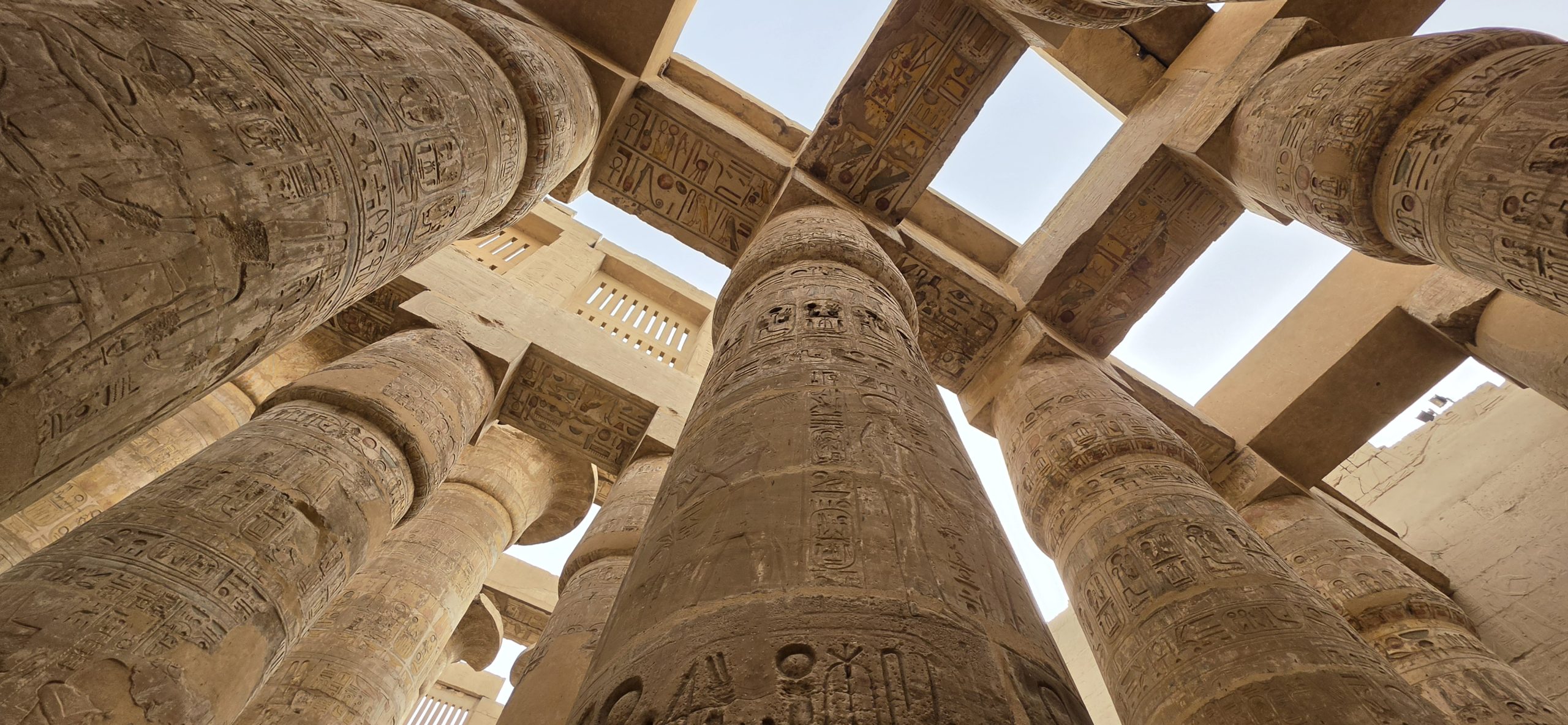
Back in Luxor, the trip ends with two monuments that could each justify several hours on their own: the vast Karnak complex, with its forest of 134 columns, followed by Luxor Temple at nightfall. After everything we had already seen, we thought we might be getting difficult to impress. Karnak quickly proved otherwise.
Day 10 — Luxor and the journey home
On 18 April, depending on the flight schedule, we make the most of our final hours before the transfer to Luxor Airport and the flight back to France. A short trip compared with the scale of the country, but an exceptionally dense one.
🗺️ Map of our trip through Egypt
This map shows the main stages of our trip, from Cairo and the Giza Pyramids to Abu Simbel, via the major sites of the Nile Valley.
Our Nile cruise aboard the MS Monica
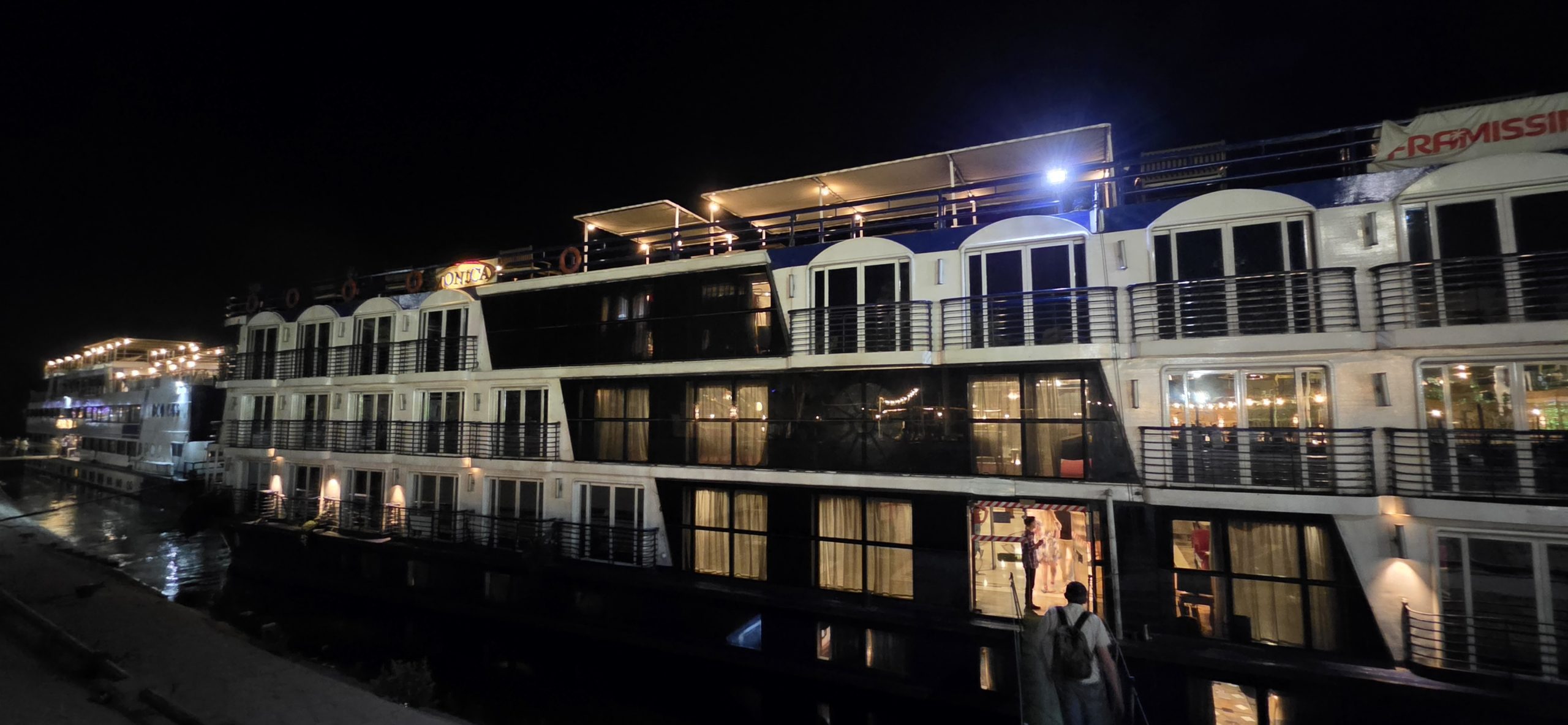
We had booked a standard double cabin on the MS Monica. When we arrived in Luxor, we were unexpectedly upgraded to a large suite at the front of the ship. It was a great surprise, although our first night at the dock came with a continuous hum from the generator of another boat moored directly in front of us.
That first night also introduced us to one of the peculiarities of Nile cruises: when there is not enough room along the quay, boats are moored side by side. Reaching the shore can mean walking through the lobbies of several neighbouring ships. It is unusual, but it also explains the engine noise, fuel smells and close proximity between boats at certain stops.
The full-board formula makes the trip extremely easy: meals on board, organised transfers and a visit schedule handled for you. The trade-off is that starts can be very early and the programme can feel intense. Our free day in Aswan reminded us how much we also enjoy having time to explore independently.
How much did our 10-day Egypt trip cost?
Using the conversion rate chosen for this English version, €1 = $1.16, our actual package cost of €4,617.60 for two people is shown as $5,356.42 for two, or $2,678.21 per person, for the 10-day / 9-night package. The dollar amounts below are conversions of the euro prices we actually paid or were quoted in 2026, not current exchange-rate estimates.
| Item | For 2 people |
|---|---|
| Isis package — 10 days / 9 nights | $4,196.88 |
| Airport taxes | $892.04 |
| Visa + service fees | $220.40 |
| Booking fee | $37.12 |
| Additional visa fees | $9.98 |
| Airport / hotel / boat transfers | Included |
| 23 kg checked baggage, return | Included |
| Total package cost | $5,356.42 |
Worth noting: this is the base package price we actually paid. Some visits were offered by the organiser as optional extras and were therefore added depending on the options chosen on site.
Optional excursion prices listed in our programme
| Excursion | Quoted price / adult |
|---|---|
| National Museum of Egyptian Civilization | $58.00 |
| Luxor souk | $5.80 |
| Philae sound and light show | $58.00 |
| Philae Temple | $48.72 |
| Nubian village | $58.00 |
| Abu Simbel | ≈ $139.20 |
| Felucca ride in Aswan | $17.40 |
| Aswan city tour | $34.80 |
| Horse-drawn carriage in Luxor | $29.00 |
| Luxor Museum | ≈ $46.40 |
| Valley of the Kings | $54.52 |
| Valley of the Queens | $40.60 |
| Temple of Hatshepsut | $42.92 |
| Karnak sound and light show | $58.00 |
These figures are conversions at €1 = $1.16 of the prices shown in our 2026 travel programme. They do not mean that we bought every option, nor that the prices are still the same today.
One example shows why it is worth comparing prices: for Tutankhamun’s tomb, an optional visit was offered through the tourist intermediary at a much higher price. We eventually bought our extra tickets directly at the official Valley of the Kings ticket office and paid less than $46.40 for two at the conversion rate used in this article.
Organised tour or independent travel in Egypt? Our view after 10 days
For this first trip to Egypt, the organised tour allowed us to see a huge amount in a short time without having to manage transport, tickets and transfers ourselves. For Cairo, Luxor and the sequence of major Nile Valley sites, that simplicity is a real advantage.
But whenever we had the opportunity, we also rediscovered how much we enjoy travelling independently. Our improvised day in Aswan remains a great memory, and Abu Simbel is exactly the kind of place where, next time, we would like to choose our own timing and stay overnight.
Our conclusion is fairly simple: a cruise is an excellent way to discover the Nile Valley for the first time, as long as you are comfortable with a schedule that is sometimes imposed. For a second trip, we would be tempted to organise more of it ourselves.
The 11 episodes of our Egypt trip
- 🇪🇬 Episode 1 — Cairo & Giza
- 🇪🇬 Episode 2 — Grand Egyptian Museum
- 🇪🇬 Episode 3 — Nile Cruise
- 🇪🇬 Episode 4 — Hatshepsut Temple
- 🇪🇬 Episode 5 — Valley of the Kings
- 🇪🇬 Episode 6 — Edfu Temple
- 🇪🇬 Episode 7 — Kom Ombo Temple
- 🇪🇬 Episode 8 — Philae Temple
- 🇪🇬 Episode 9 — Aswan & Nubian Village
- 🇪🇬 Episode 10 — Abu Simbel
- 🇪🇬 Episode 11 — Karnak & Luxor
Our verdict after 10 days in Egypt
This trip felt very different from our usual itineraries. Here, the road was not the thread holding the journey together: the Nile was. We went from the almost permanent noise of Cairo to the mineral silence of Luxor’s necropolises, then on to the palm trees of Aswan and the Nubian Desert around Abu Simbel.
The pyramids were obviously something we expected to be impressive. Several other places surprised us even more once we were there: Karnak’s Hypostyle Hall, the remarkably preserved Temple of Edfu, Kom Ombo after dark, the contrast of Philae sitting on its island, and the strange emotion of standing in front of Tutankhamun’s mummy.
Ten days can never sum up Egypt. But as a first approach combining Cairo and a Nile cruise, this journey gave us an exceptionally rich introduction to the country — and, above all, made us want to return one day with even more freedom.